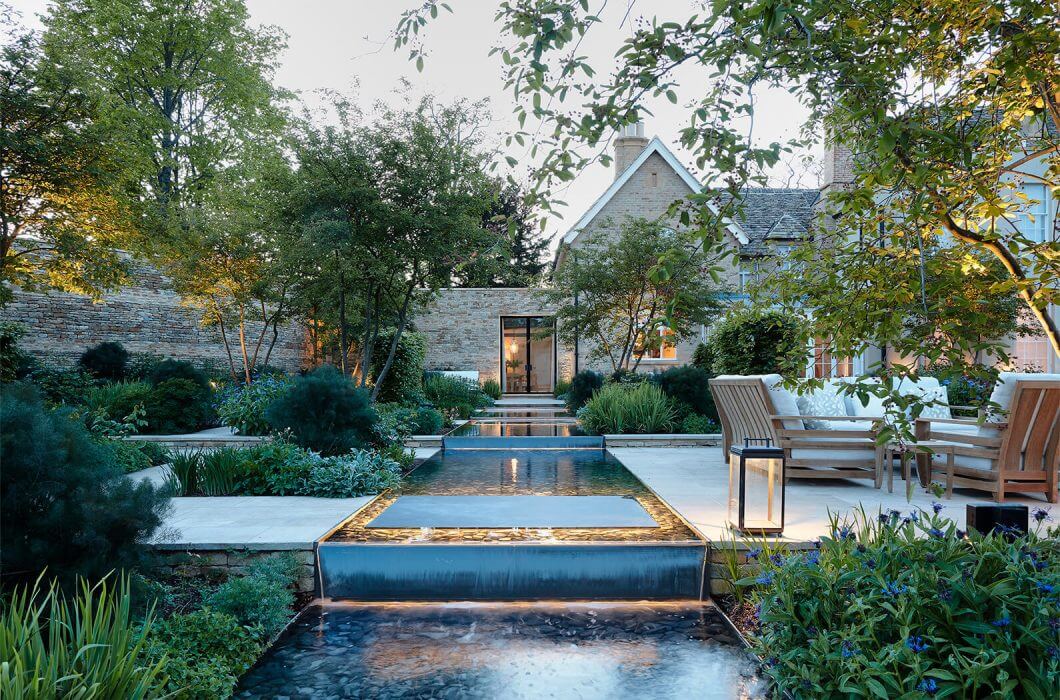
Our gardens are refuges – both for us as humans and for wildlife – and an increasing awareness of the climate means that they are truly becoming biodiversity hotspots. Whether you have an urban garden or a large country estate, just imagine these spaces like little dots on a map, creating a green network that just keeps expanding. For me, this increased interest in plants, nature and the environment is the biggest trend this year, and the most positive one. Having just been at the Chelsea Flower Show this week, it is a theme that plays out in many of the show gardens and exhibits.
Informal, meadow-inspired planting is the aesthetic that everyone is dialling into, with soft colours and a mixture of native and non-native plants. Many of the Chelsea gardens were planted into gravel this year, showcasing resilient species like cistus, valerian, fennel and salvias that respond well to periods of drought. But these Chelsea gardens are pieces of theatre at the end of the day, designed to spark ideas and broaden the public’s knowledge of plants and planting combinations.
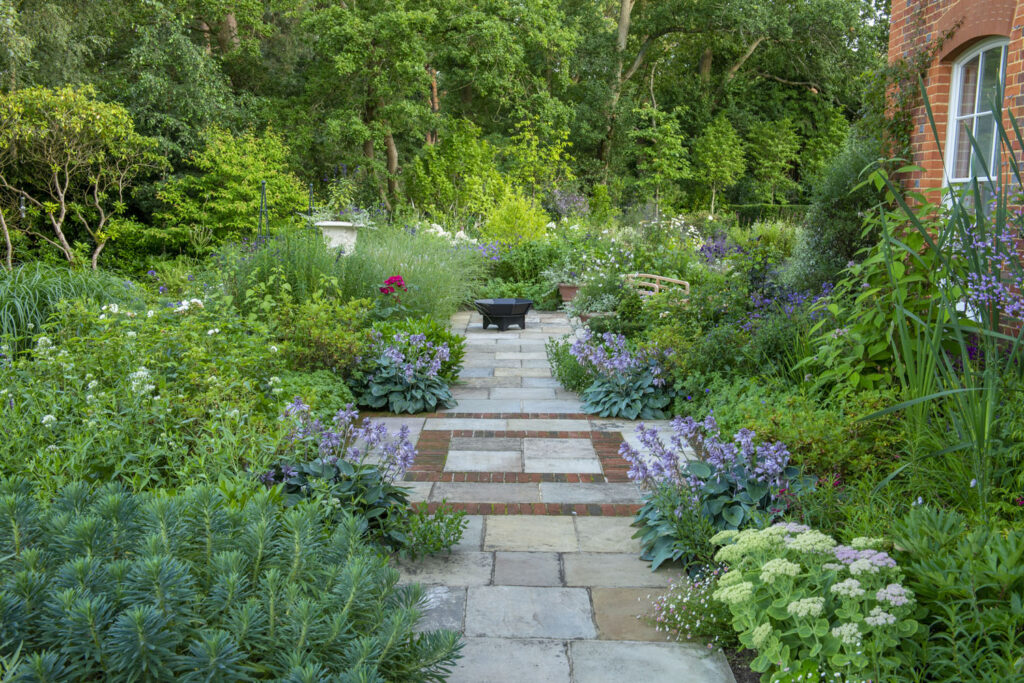
Garden designed by Mazzullo + Russell © Marianne Majerus
Real gardens have to be lived in, and this is where designers like Alasdair Cameron, Jo Thompson, Libby Russell and Randle Siddeley come in, all of them creating stylish contemporary gardens for clients to live in. ‘More and more of our clients are interested in the concept of sustainability, so we are using recycled materials and introducing more areas of planting and less lawn,’ says Alasdair. ‘We try to encourage people to use fewer pesticides and artificial fertilisers and reduce irrigation. We use a range of ornamental plants that aren’t native to Britain, but these still bring the pollinators in. And we’re increasingly working with native trees and hedging to bring more wildlife in.’
The concept of the traditional, high-maintenance herbaceous border is disappearing, along with traditional rose gardens and shrubberies, replaced by more diverse planting schemes mixing all these elements together. Gone are the big monoculture drifts of a single type of plant and large areas of lawn; instead we are surrounding ourselves with planting that mimics nature. However, the movement towards a looser, plant-filled aesthetic can be problematic unless it is underpinned by a strong core design, and this is where a professional designer can be invaluable. It’s all very well leaving your lawn to grow long this May and letting a few weeds creep in around the edges of the garden for the pollinators, but if you don’t have the underlying framework, your garden can descend into a sprawling mess. An expertly designed structure of paths, hedges and beds can immediately make sense of the space, and whether these elements are crafted from stone, wood or evergreens, they are essential to anchor the froth of naturalistic flowers and foliage that is laid on top.
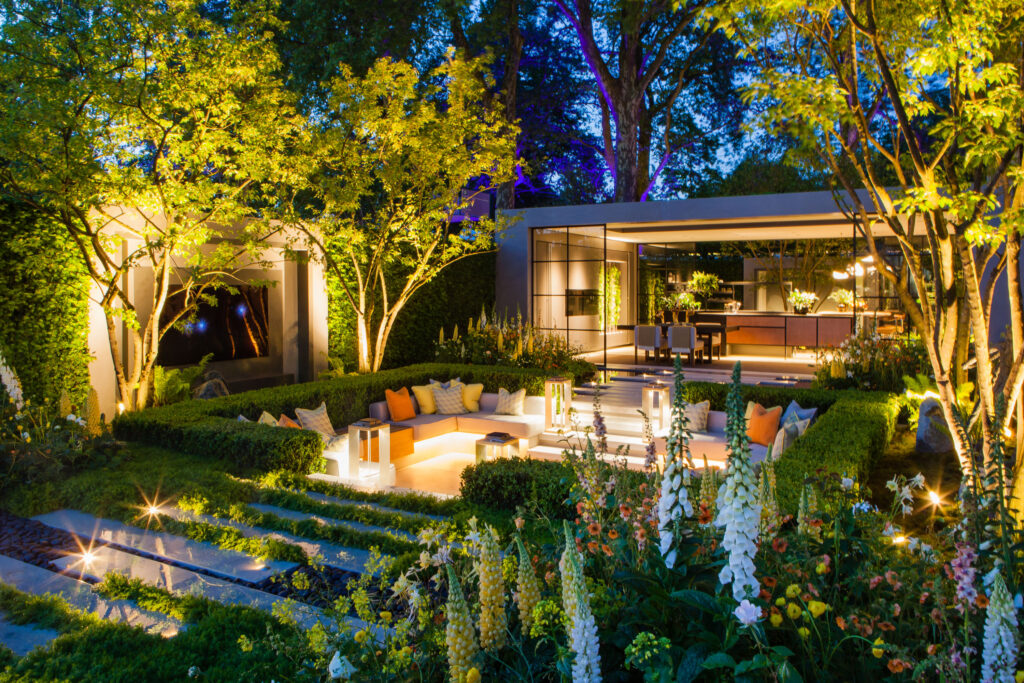
Garden designed by Randle Siddeley © Randle Siddeley
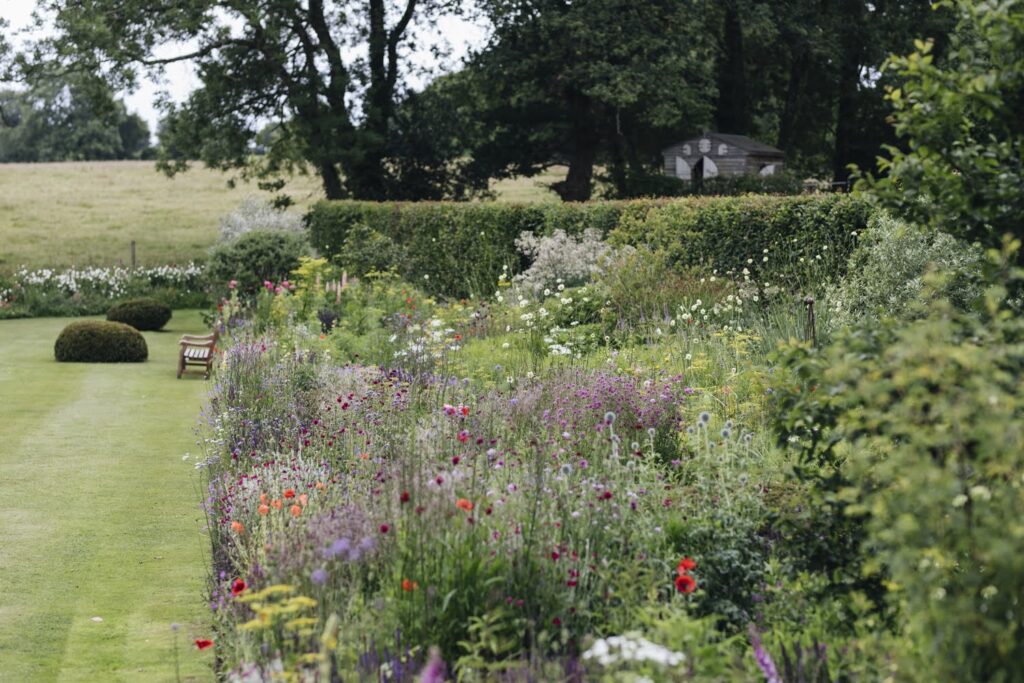
Garden designed by Alasdair Cameron © Cameron Gardens
Jo Thompson thinks that the general public is adjusting their eye to a looser, more relaxed aesthetic. ‘Everything is feeling very natural in terms of both shape and conceptuality,’ she says. ‘I’m bringing in more meadow-type plantings and encouraging self-seeders, so the plants themselves bring in the structure and the architecture and the garden almost designs itself as time goes on. My clients are embracing curves and flowing lines and moving away from more geometric schemes.’ She also highlights a trend towards embracing wellness in the garden, with clients wanting to incorporate plunge pools and saunas into their designs.
Libby Russell from Mazullo Russell Landscape Design agrees: ‘People are seeing the benefits of their gardens and understanding they can be a real interface to the natural world,’ she says. ‘Gardens aren’t just for looking at, they are for living in.’ She also sees an increased demand for what she describes as ‘edimental’ gardens that combine fruit, vegetables, herbs and ornamental plants. ‘People have a dream about growing vegetables, and we love to design really beautiful kitchen gardens,’ she says.
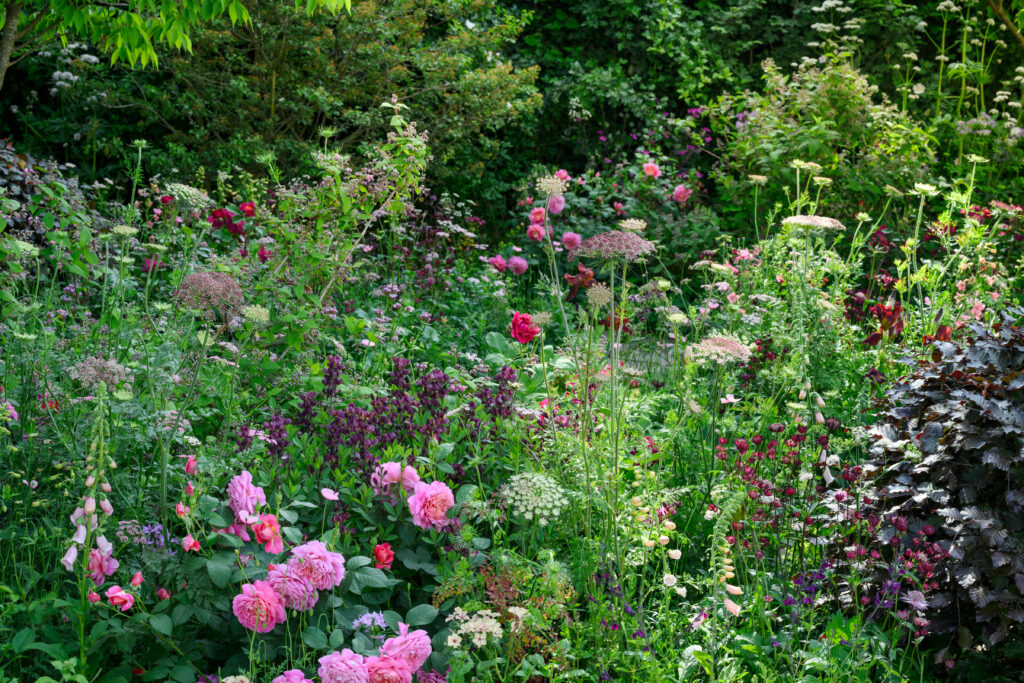
Garden designed by Jo Thompson © Jo Thompson
Mixing veg and flowers into colourful borders was something I saw at Chelsea too, especially in the delightful garden designed by Frances Tophill for the RHS and the King’s Foundation. Cabbages, kale and lettuces were dotted in among roses, delphiniums and other cottage garden favourites, showing how ornamental some of these edible crops can be. This traditional cottage garden style is being reinvented for the 21st century, fitting perfectly into the blueprint of a modern, biodiverse garden.
Hand in hand with the interest in growing edible crops, the outdoor kitchen is also an element that people are incorporating into their gardens more and more. Gardens are seen very much as an extension of a living space, especially with the climate warming to potentially give us more Mediterranean-like temperatures. Garden lighting is something that enables us to stretch the evenings out in our gardens, and Randle Siddeley is adamant that lighting should be considered in every project: ‘Lighting remains one of the most underrated and transformative aspects of landscape design,’ he says. ‘Gardens take on a completely different character at night, and yet it is what clients least expect to think about. My maxim has always been: see the light, but don’t see the source.’
But perhaps the biggest trend as we go into the second quarter of the 21st century is the act of gardening itself. We are all coming to realise the benefits to our health of immersing ourselves in nature, and by observing the plants, insects, birds and other living creatures in our gardens, by becoming more aware of the weather and the seasons, we come closer to understanding the ecosystem that we ourselves are part of.