
Eaton Square, one of Belgravia’s smartest addresses, is set to benefit from a Listed Building Consent Order which will allow improvements to windows and awnings and permit solar panel installations. The impact will mean over a hundred Grade II- and II*-listed buildings can take friction-free first steps to going green. It’s an initiative that, here at RedBook, we hope will roll out to other local authorities.
The obstacles—both perceived and real—to tackling a green energy project on an old property are part of the problem. Currently, 87% of historic building owners see the UK’s planning system as a major barrier to decarbonising their property.
‘Many historic buildings in England are formulaic, such as Victorian terraced houses,’ says Cordula Zeidler, head of placemaking and heritage at conservation architectural firm Donald Insall Associates, a RedBook Partner. ‘Having a set of guidelines for these simpler, more repetitive buildings would be invaluable.’
Decarbonising a standard house is relatively simple. It requires draught-proofing, double-glazing windows and doors (or adding secondary glazing) and adding insulation to lofts and under or between floors. Then it’s a matter of installing heat pumps instead of boilers – air source heat pumps (ASHPs) are often preferred as they require less installation and cost less than ground source (GSHPs) – alongside a mix of solar panels, hidden from view either on a roof or in a neighbouring field, and integrated battery storage for even distribution throughout the year as demand requires.
 © Webb Yates
Introducing these changes to a house that is over 200 years old is much more complicated. However, thanks to advancements in the efficiency of the new generation of ASHPs, the general rule of thumb today is that if an old property can be heated by a gas- or oil-fired boiler, it can be heated by a heat pump.
The capital investment is substantial, but the payback window of between 7 and 10 years makes sense when tackling a large project on a house that will be home for decades to come. Once installed, the savings can be remarkable. For example, the Grade I-listed, 25,000 sq ft Althelhampton Manor in Dorset was chalking up energy bills of £55,000 a year until a retrofit programme began to remove fossil fuel reliance. It now costs about £500 a year—mostly made up of standing charges.
Before we turn to some of RedBook’s valued Partners for advice about how best to approach such a project, I want to leave you with a thought. Sixty years ago, many homeowners in this country faced paying for another significant retrofitting programme: the installation of central heating. It was so long ago that everyone’s forgotten about the cost and hassle involved with laying all the pipework and radiators from scratch.
But there are parallels to where we are today. In the 1970s, the UK transitioned from being heavily reliant on domestically mined coal to exploiting newly discovered—and cheaper–North Sea oil and gas. Now we are facing different challenges in energy supplies, which make the case for using sustainable sources even stronger.
Elisa Sartori is associate director at the multi-disciplinary engineering firm Webb Yates, a RedBook Partner. Like many, their approach to decarbonising historic houses does not follow a one-size-fits-all process.
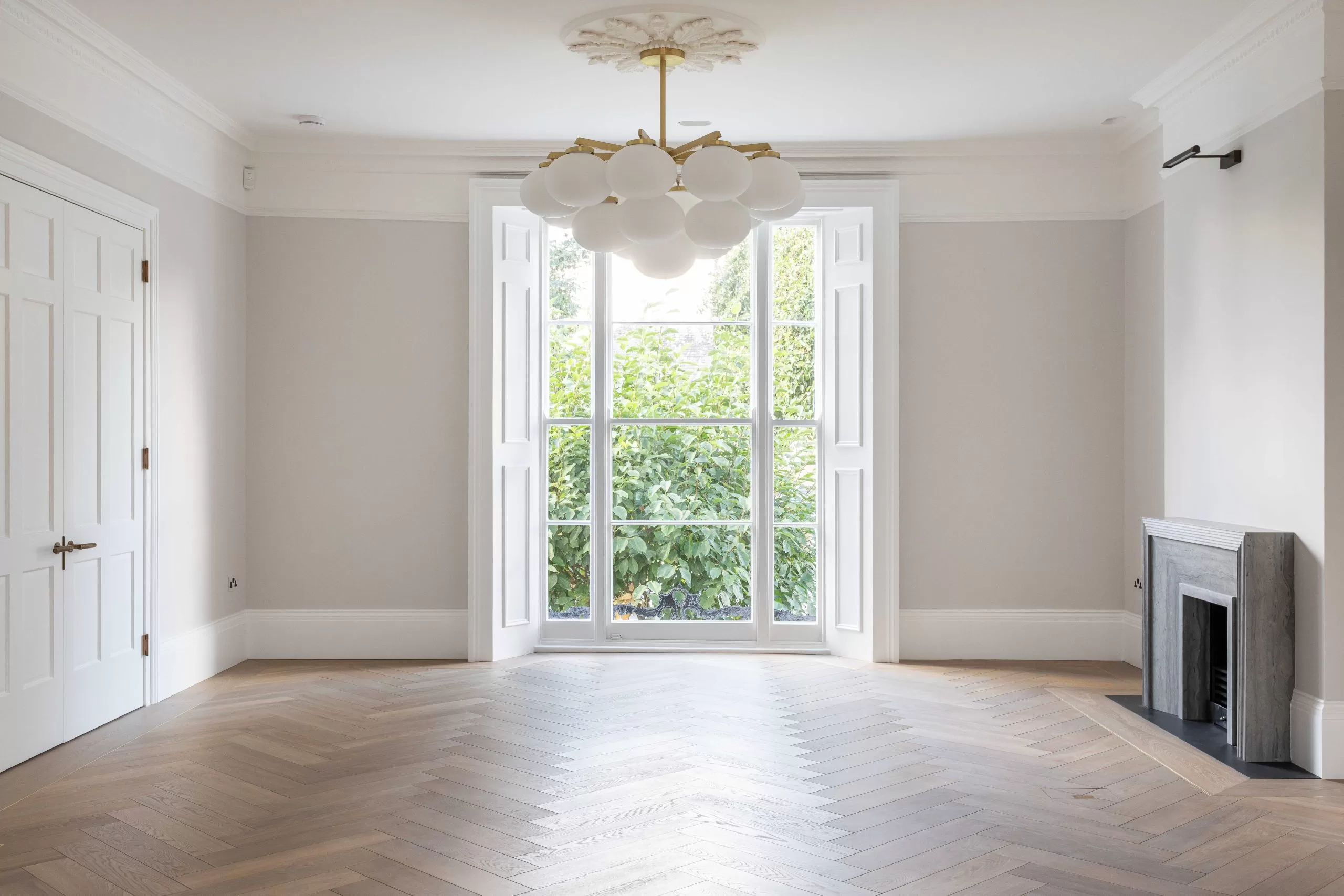
 © Donald Insall Associates – photo by Jonathan Bond
She explains: ‘Much depends on the budget and appetite of the client, but the important message is that to achieve goals it isn’t about applying measures to every room of the house. We look holistically at what can be done.’
To do this, the Webb Yates team utilise 3D thermal models which determine the environmental condition of each room of the house throughout the year. This generates options for the client. ‘It means we can tailor an approach that best meets the client’s needs,’ says Elisa.
While upgrading options depend on the building, there are limits when it comes to working with older houses, explains Sophie Williams, building performance engineer at Mesh, a RedBook Partner. ‘Discussions start with the architect and heritage consultants to ascertain the level and depth of upgrades—and any constraints—that we can work with without compromising the character of the building.’
Mitch Cooke founded Greengage, a sustainability consultancy which advises on carbon reduction strategies, including how to decarbonise homes, in 2006. ‘There used to be a perception that ASHPs were too large, noisy and unsuitable for old houses. These myths have been busted in the last five years. The technology has moved on; they are a lot smaller and more discreet, and they can be used with existing wet heating systems. Also, the thinking has evolved: in the case of old houses, insulation needs to be good, but it doesn’t have to be completely airtight.’
The sector is moving at such a pace that Mitch believes oil and gas will soon be forgotten technologies. ‘Just look at China, where there are now batteries in cars that can be charged at the same time—or less—than a standard fuel tank. Like anything, the more research goes into that sector, the greater the efficiencies and improvements made.’
The team at Mesh agree: ‘There will be more options – new products, technology improvements and innovations—that are specifically designed for listed and heritage buildings,’ says Sophie.
At the end of the day, as Cordula Zeildler notes, this transition is about showing owners of old or listed properties the possibilities and benefits that embracing green energy represents. ‘Technology is our friend here: we need to take advantage of it.’
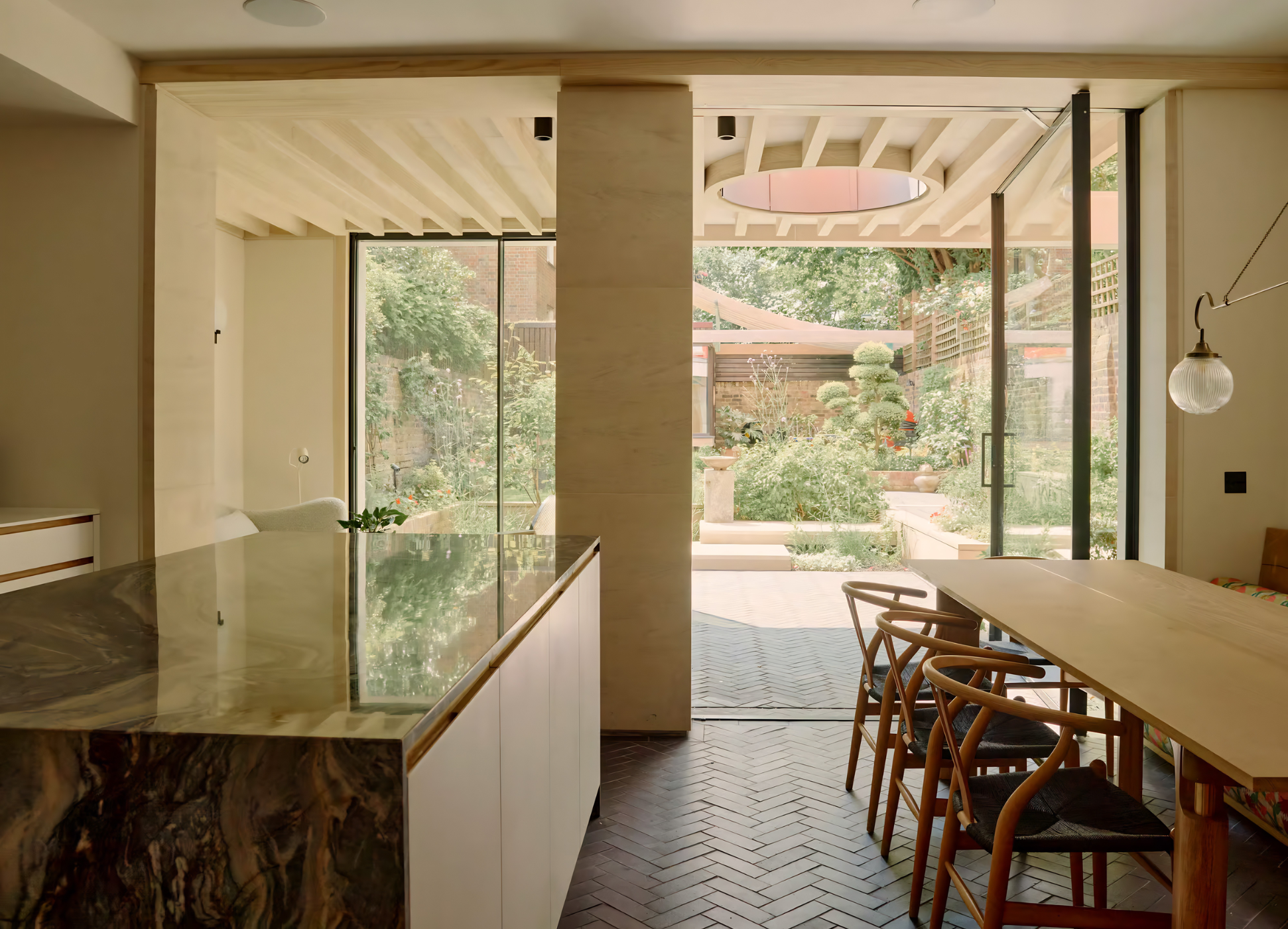 © Webb Yates